
One of the clearest lessons from our August 2026 visit to South Africa was not how much still needs to be built. It was how much of what mothers need already exists, in different places, held by different people, but not always connected.
Across Johannesburg, Durban and Cape Town, we met clinicians with expertise, community organizations with local knowledge, faith leaders with trust, business networks with reach, and people willing to bring their relationships and resources to the cause. Each held something valuable. But no one held the whole journey.
A mother does not experience a system. She experiences a journey.
She experiences whether antenatal care is within reach, whether a skilled health worker is available when she needs one, whether medicines and supplies are there, whether a referral leads somewhere, whether transport arrives, and whether she and her baby are treated with dignity and receive the support they need after birth.
For the organizations working around her, these may be separate responsibilities. For the mother, they are not.
Connecting those separate strengths around one maternal-health journey sits at the heart of Every Pregnancy’s work. Our time in South Africa showed us what that can look like in real life, and what can happen when those different parts begin to connect around the mother.
When the maternal-health journey begins before healthcare
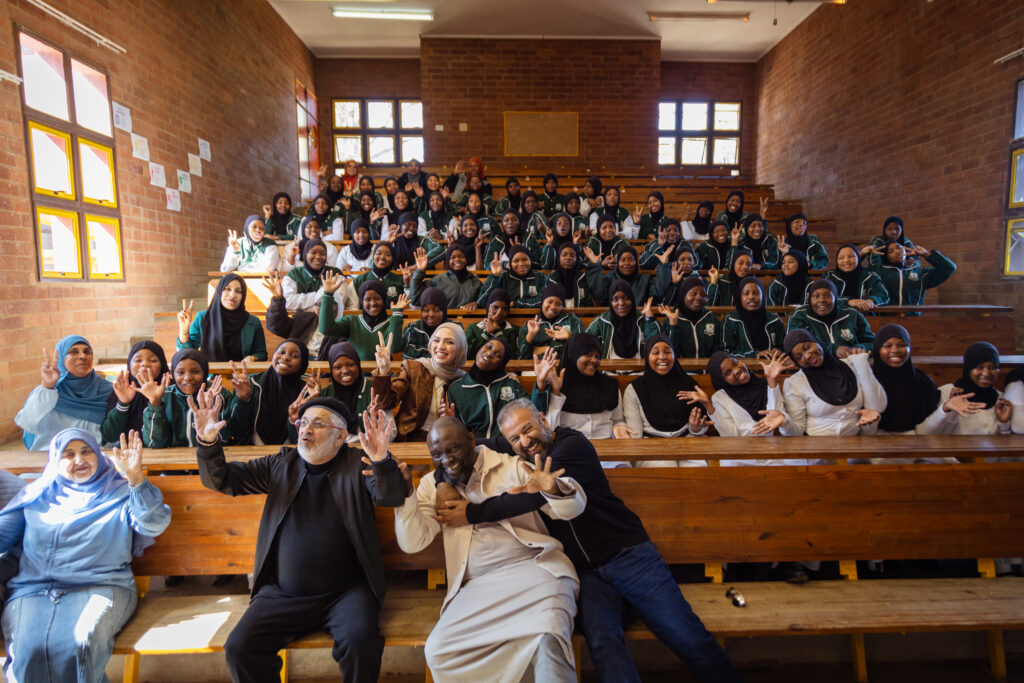
At Alexandra School in Johannesburg, a conversation about pregnancy among school-age girls quickly moved beyond healthcare delivery.
School leaders spoke about pregnancies among students and the wider realities of vulnerability, coercion, sexual violence and safety. These realities begin long before a girl reaches a maternity ward. They reminded us that maternal health cannot be understood only through the care available once a woman is pregnant. What happens around her, and before she reaches care, matters too.
An educator may notice risk before a clinician does. A community organization may see vulnerabilities a medical record misses. A trusted local leader may reach families formal institutions cannot.
These roles do not replace clinical care. But they can shape whether a woman or girl reaches that care safely, supported and able to get the help she needs.
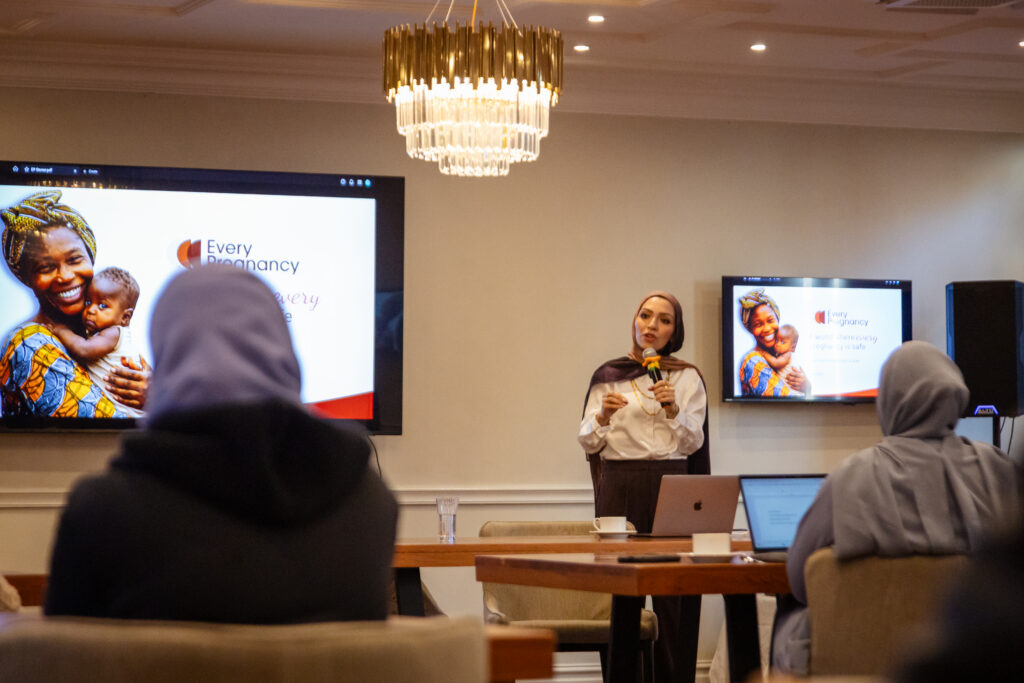
That connection between clinical care and a woman’s wider experience deepened during Every Pregnancy Founder and CEO Isra Chaker’s conversation with Dr. Zaheerah Ismail-Bham on Beyond This.
The conversation placed motherhood within the wider realities of women’s lives, including faith, family, vulnerability, dignity and emotional wellbeing. It was a reminder that quality maternal care is not only about whether the right clinical intervention happens. It is also about whether a woman feels heard, respected and treated with dignity.
Dr. Zaheerah has since joined Every Pregnancy’s Advisory Board, bringing that perspective and an important South African voice into the coalition’s wider thinking.
Explore the conversation: Beyond This with Dr. Zaheerah Ismail-Bham
Strong clinical care still depends on what surrounds it
In Durban, the conversation moved closer to frontline care.
Obstetricians, midwives and other health professionals were clear about what good maternal care requires. Clinical expertise is essential, but its impact depends on what surrounds it: adequate staffing, medicines, equipment, referral pathways, transport and systems able to respond when complications arise.
A skilled clinician cannot compensate for weaknesses elsewhere in the pathway.
Our conversation with INX Prime explored maternal health as a connected journey, where prevention, community trust, locally led solutions and clinical care are stronger when they work together rather than separately.
Explore the conversation: INX Prime: Creating Safer Pregnancy Journeys
Durban also widened the question of who belongs in that journey.
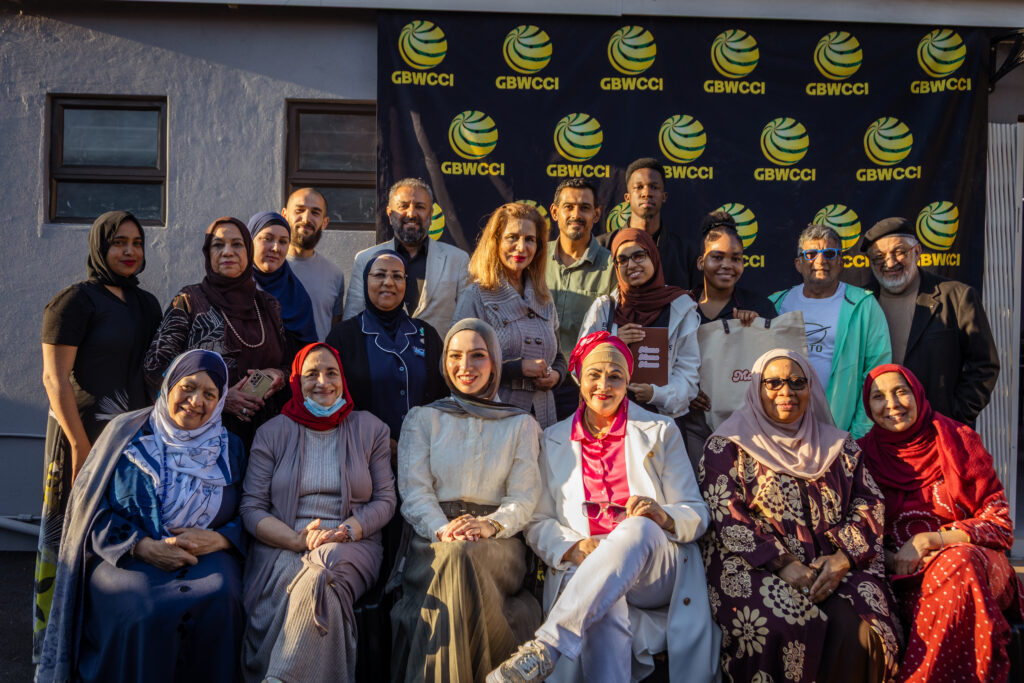
Our engagement with Fawzia Peer and the Global Business Women’s Chamber of Commerce and Industry explored what business networks might contribute through relationships, influence, expertise and resources. At As Salaam School, young girls spoke about their voices and futures before performing a song they had written for mothers.
The encounters were very different, but they pointed to the same principle: not everyone needs to play the same role. What matters is whether each person or institution can contribute what they are best placed to offer, and whether those contributions connect around the mother.
Trust is part of what makes a pathway work
Cape Town brought another part of the maternal-health journey into focus: trust.
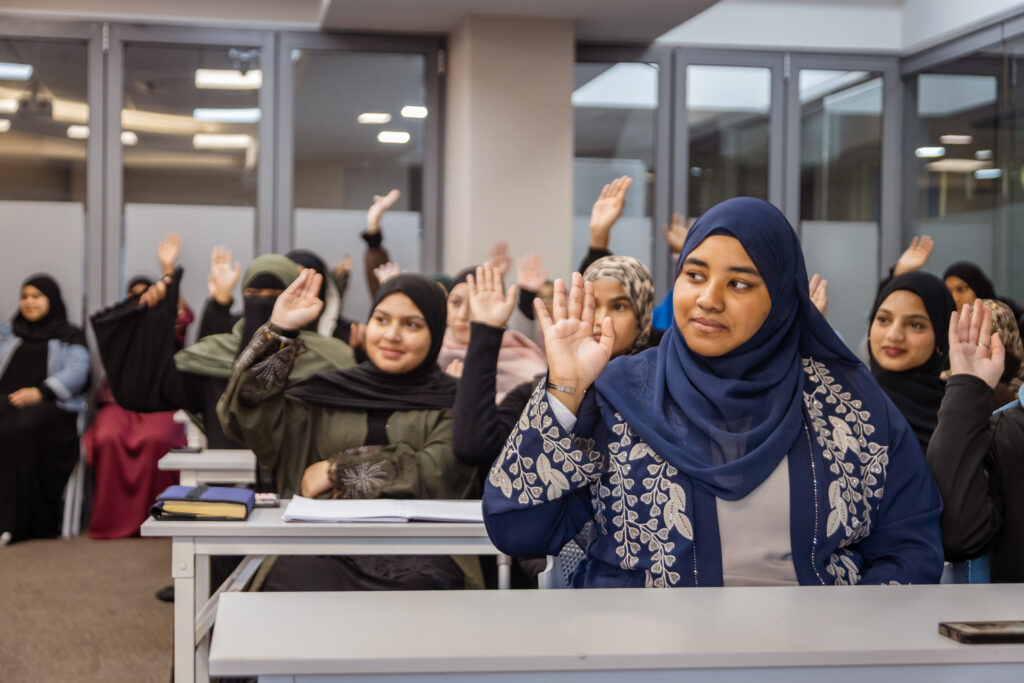
At Madina Institute, around 100 young people gathered as Isra shared how her own experiences of adversity shaped her sense of purpose, opening a wider conversation about resilience, leadership and responsibility.
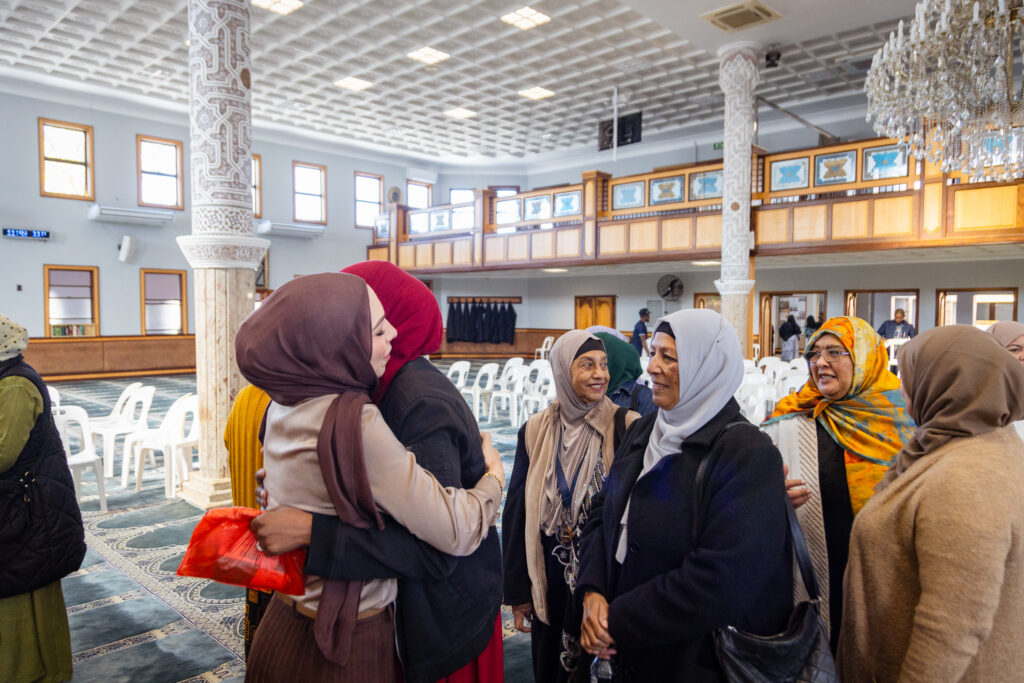
At Masjid Al-Quds, the Every Pregnancy team was welcomed into regular programming attended by more than 400 women.
What mattered was that we had not built that trust. We had been invited into a space where it already existed.
That stayed with us.
Health services can exist without being trusted, and information without reaching the women who need it. Programs are stronger when they are connected to the relationships and institutions communities already know and trust.
Faith leaders, community organizations, educators and trusted public voices therefore hold a different kind of infrastructure, one built through relationships rather than buildings or facilities.
That infrastructure cannot replace clinical expertise. But it is not separate from the maternal-health journey either.
Our conversation with Radio Al Ansaar deepened this question by exploring what faith leadership, philanthropy and trusted community institutions can contribute to maternal and newborn health, particularly when the issue needs to move beyond health-sector audiences and into the everyday spaces where mothers, families and communities already gather.
Explore the conversation: Radio Al Ansaar
Different partners. One mother.
Taken individually, these conversations could appear to belong to very different agendas.
A school discussing the safety of adolescent girls.
A clinician discussing referrals and medicines.
A business network exploring how its influence could support the cause.
A mosque creating space for hundreds of women to talk about mothers, dignity and responsibility.
A journalist opening a public conversation.
A locally rooted organization bringing deep knowledge of its community.
But from the perspective of a mother, these worlds are not as separate as they appear.
Her outcome can be shaped by all of them.
That is where fragmentation becomes real. Strong people, institutions and interventions can exist across a maternal-health journey and still fall short when the connections between them are weak.
The same is true across the Every Pregnancy coalition. No single partner is expected to hold the entire journey. One may bring clinical expertise, another financing, another community relationships, implementation capacity, evidence or advocacy.
These capabilities are not interchangeable, nor should they be. The value of the coalition comes from connecting different strengths around the same mother.
That is why Every Pregnancy focuses on connecting financing, locally rooted leadership, expertise and proven care, so that strong work in one part of the journey is not isolated from what a mother needs in another.
What South Africa adds to the wider coalition
South Africa made that opportunity tangible. Many of the strengths needed to support mothers and babies were already present. The opportunity is not simply to create more. It is to connect more of what already exists.
That work has begun. Dr. Zaheerah Ismail-Bham has joined Every Pregnancy’s Advisory Board, and coalition conversations are continuing with Islamic Relief South Africa, 1000 Days of Grace Foundation and The Zoe Project.
For Every Pregnancy, the next step is to keep building on the relationships formed during the visit, deepen the conversations where connection can add value, and make sure South African voices continue to shape the coalition’s learning, partnerships and convenings.
But the significance of the visit goes beyond the relationships formed in one country.
For the wider Every Pregnancy coalition, South Africa left us with a simple question:
How does the part of the maternal-health journey that we hold connect to the parts held by others?
Are locally rooted organizations present early enough in the conversation?
Does financing reach the places where implementation is constrained?
Is technical expertise connected to those able to put it into practice?
Are we designing around the boundaries of our organizations, or around the journey a mother actually experiences?
The question for each of us is not whether we can hold the whole journey. It is whether the part we hold is connected strongly enough to the parts held by others.
South Africa helped make the value of that connection visible. Now the work is to carry it forward across the coalition.
One mother. One journey. Together, we make every pregnancy safe.