Five lessons on turning newborn-care technology into effective rural care in Tanzania and Kenya
By: Doris Mollel and Marleen Vellekoop
When discussions turn to newborn survival, attention often focuses on the next breakthrough: a new medicine, a new technology, or a new hospital.
These innovations matter. But their existence alone does not ensure they reach the newborns who need them.
Every year, approximately 2.3 million babies die during their first month of life, and almost half die within the first 24 hours after birth. Most of these deaths occur in low- and middle-income countries, and many could be prevented with interventions that already exist. The challenge is no longer simply discovering solutions. It is ensuring that they consistently reach the mothers, newborns, health facilities, and health workers who need them most.
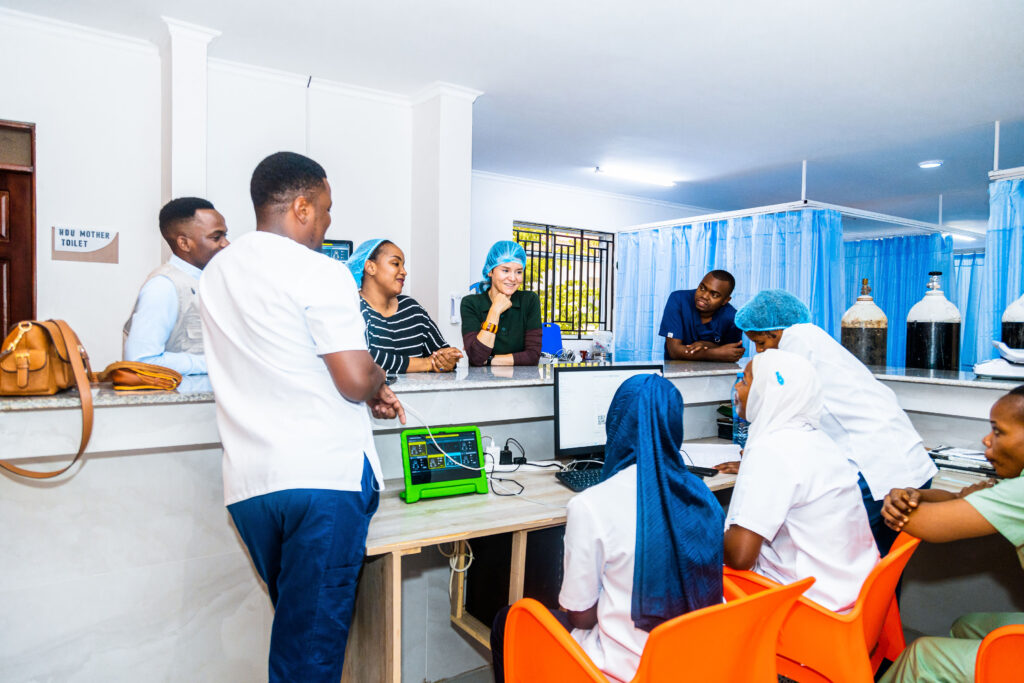
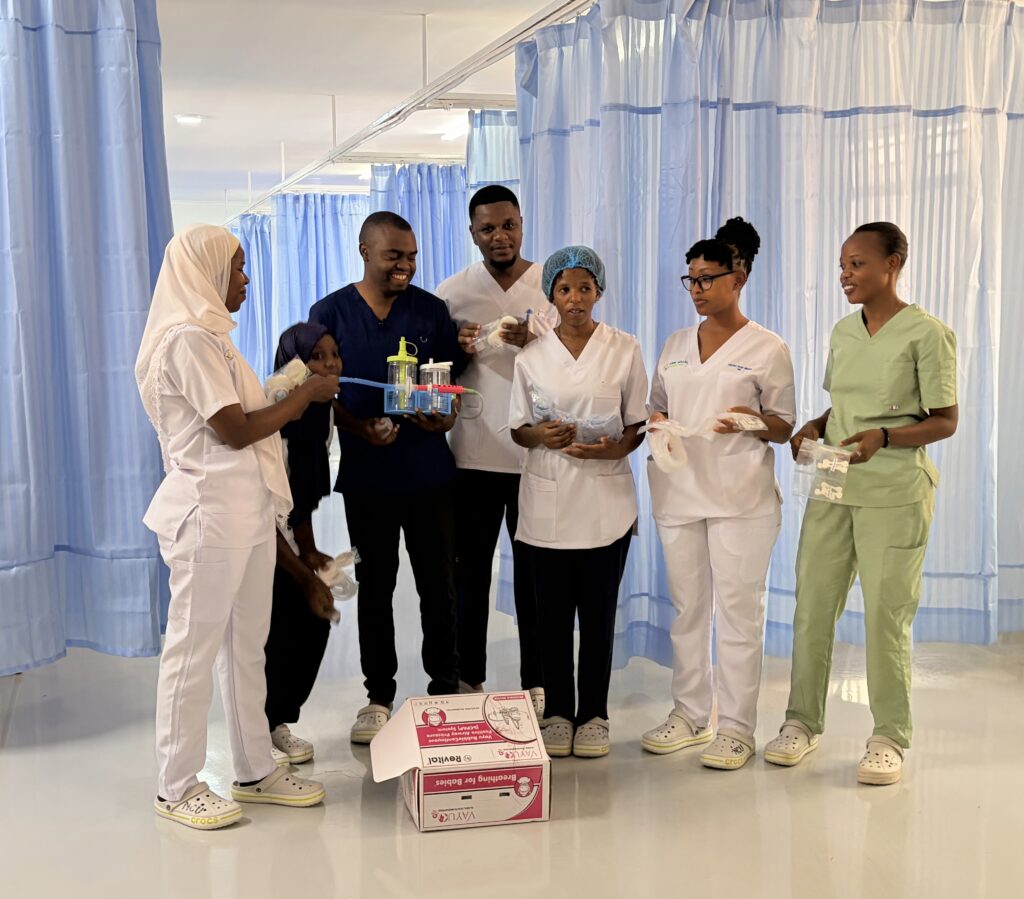
Over the past several months, Every Pregnancy has worked alongside two coalition partners, the Doris Mollel Foundation in Tanzania and Baitulmaal in Kenya, to strengthen newborn care in rural communities where mortality remains high. Together with Vayu Global Health, a women-led medical technology company, we worked to provide Bubble CPAP devices to partner-supported facilities, expand the initiative through nine additional donated devices, and support practical training on the devices for health workers serving remote communities.
As this work developed across Tanzania and Kenya, one message became increasingly clear: improving newborn survival is not simply about introducing better technology. It requires understanding communities, strengthening health systems, supporting health workers, and connecting organizations that each hold a different part of the solution.
The experience highlighted five lessons about what helps turn an innovation from a device into effective care.
Lesson 1: The people closest to the problem are often closest to the solution
Global health programs often begin by asking: What services should we deliver?
The Doris Mollel Foundation, a Tanzanian organization dedicated to ensuring that every mother and baby can access the healthcare they need, began with a different question: What do families actually need? In Kwimba District, where newborn mortality remains high, Doris Mollel Foundation worked closely with mothers, fathers, community members, and district health authorities while designing a new Neonatal Intensive Care Unit.
Those conversations revealed something that technical drawings alone could not. Many fathers wanted to remain close to their wives and newborns during treatment but had nowhere to stay. Because newborn units have not traditionally been designed with fathers in mind, the new unit includes dedicated space where fathers can remain close to their families.
This may appear to be a small architectural detail, but it reflects a larger principle: healthcare becomes more responsive and effective when communities help shape the services intended for them. Listening to families did not simply improve a building. It changed how care is designed and experienced.
Lesson 2: Sustainable change happens with government, not around it
Across Africa, many organizations provide essential services in underserved communities. But lasting improvements rarely come from creating systems that operate separately from public healthcare. Both the Doris Mollel Foundation and Baitulmaal have chosen to work alongside government rather than outside it. Their work strengthens existing public health services through district and county government partnerships.
In Tanzania, the Doris Mollel Foundation supports district authorities to strengthen newborn care while building local ownership from the outset. In Kenya, Baitulmaal works closely with the Wajir County health system to improve maternal and newborn services in one of the country’s most remote regions.
Government partnership is not always the fastest route. But it creates a stronger foundation for sustainability. When improvements are integrated into public health services, they can continue benefiting families long after a time-bound project has ended.
Lesson 3: Technology should adapt to rural realities, not the other way around
Breathing difficulties are a major threat to newborn survival. Continuous Positive Airway Pressure, or CPAP, can support newborns experiencing respiratory distress. But conventional CPAP systems often depend on reliable electricity and compressed medical air, resources that cannot always be guaranteed in rural hospitals.
That is why the collaboration selected the Vayu Bubble CPAP, designed specifically for low-resource settings. The device does not require electricity or compressed medical air. Its Venturi system mixes oxygen with room air, allowing it to operate using only an oxygen source.
Selecting technology around the realities of rural health systems may sound obvious. Yet innovations are still too often designed for environments very different from those where newborn mortality is highest. The most impactful innovation is not necessarily the most sophisticated. Sometimes, it is the one that continues working when the power goes out. Choosing technology appropriate to the setting helps ensure that equipment can function under the conditions rural hospitals face.
Lesson 4: Equipment alone does not save lives
To support partners working in rural communities, Every Pregnancy used funding from the Continuum Spark Awards. Earlier this year, the Continuum Spark Awards recognized the coalition as one of the world’s most innovative Muslim philanthropic initiatives.
The award allowed the coalition to put that recognition into practice. Every Pregnancy used the prize funding to help provide Bubble CPAP devices to rural hospitals supported by coalition partners in Kenya, Tanzania, Syria, Nigeria, and Sudan.
The wider initiative extended beyond the two countries featured in this story, but the experiences in Tanzania and Kenya offer particularly important lessons about local delivery.
Vayu Global Health then donated an additional twelve devices, extending the reach of the original investment.
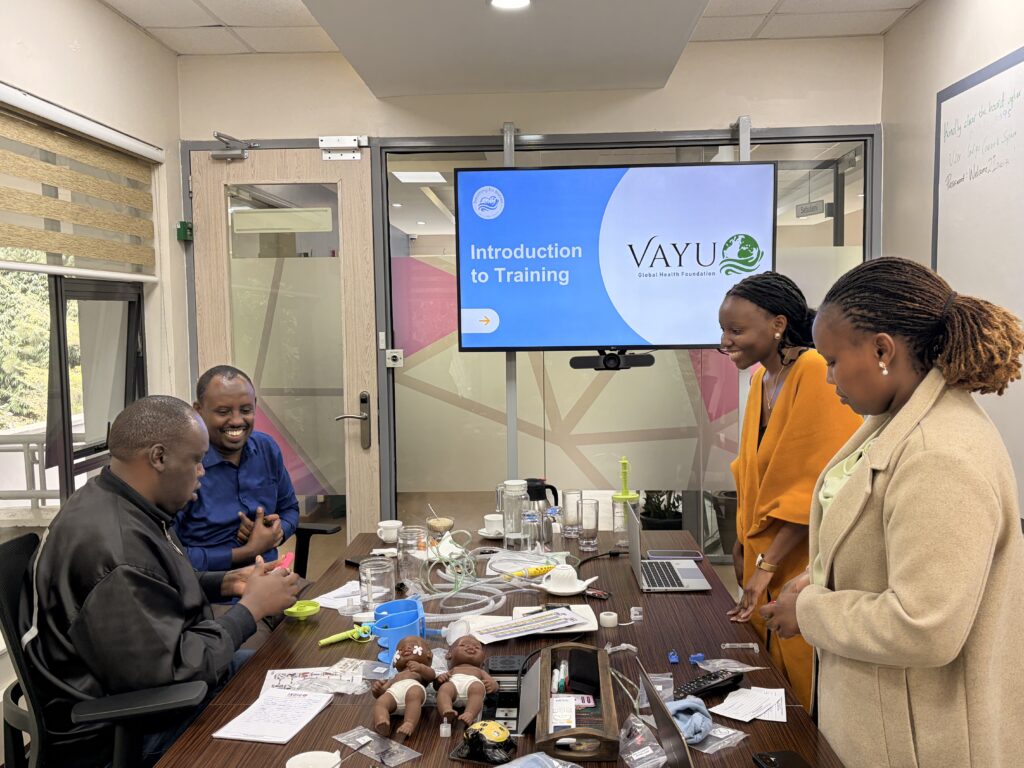
Together, these contributions expanded the number of devices available to coalition partners and strengthened the support surrounding their use. But providing equipment was only one step. Every Pregnancy and Baitulmaal also supported health workers to attend practical training in Nairobi. Among the participants were Mohamed Bambucha and Langat Laban Cheruiyot, two health professionals supported by Baitulmaal who travelled more than 12 hours over unpaved roads from Wajir County. Wajir’s neonatal mortality rate is estimated at 37 to 44 deaths per 1,000 live births, almost double Kenya’s national average.
During the training, they described a challenge familiar across many rural health systems: hospitals sometimes receive equipment without the training, mentorship, and continuing support health workers need to use it confidently. Their experience reinforced an essential lesson: investing in innovation also means investing in the people who turn technology into care.
Lesson 5: Saving newborn lives depends on connecting unlikely partners
Perhaps the most important lesson is that newborn survival depends on partnerships whose role is often less visible than the technology itself. This story contains many parts of the same delivery puzzle: culture, funding, innovation, trust, government, training, and frontline care. Each contribution may appear limited on its own. Together, they determine whether a newborn struggling to breathe can receive appropriate care.
This is where Every Pregnancy seeks to add value: by connecting organizations that each hold a different part of the solution. We helped connect catalytic funding and suitable technology with coalition partners whose local relationships, government partnerships, and frontline experience supported delivery.
The greatest barrier is not always the absence of a proven solution. It is making sure that solution reaches the right facility, is supported by trained health workers, and can be used when a newborn needs it. A device alone cannot save a newborn. It must be suited to the setting, supported by the health system, understood by trained professionals, and available when a baby needs it.
That journey requires all of us. Local organizations, communities, governments, health workers, innovators, and funders each hold part of the answer. By connecting appropriate technology with local leadership, public health systems, and trained health workers, Every Pregnancy helps proven solutions move from device to delivery. When every part of the system works together, more newborns have what all deserve: the chance to take their first breath.